





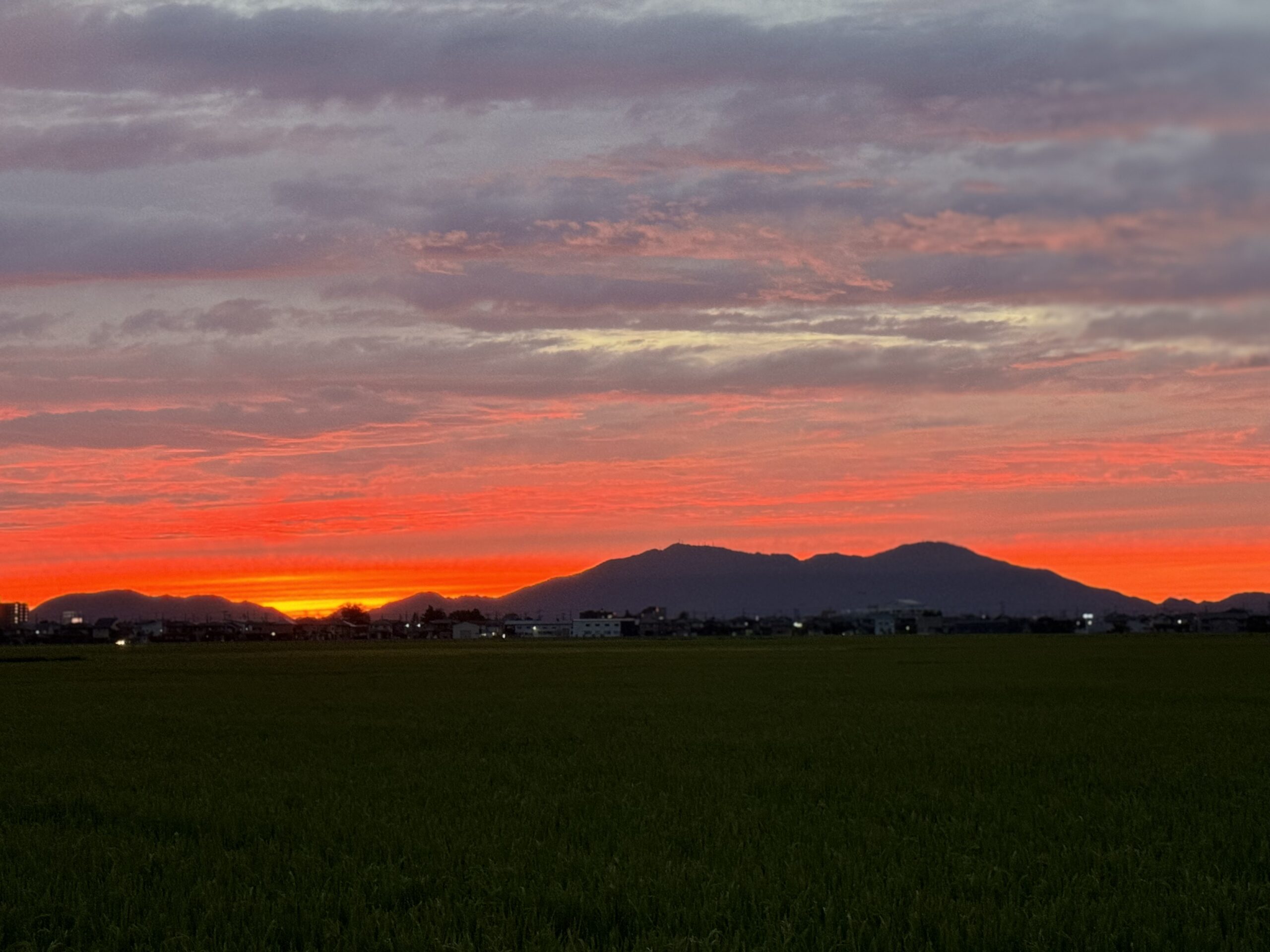
In the previous post of “Subtle Changes of the Seasons Known Only to Locals“, I wrote about the swans. This time, I would like to write about the mountains we look up at every day.
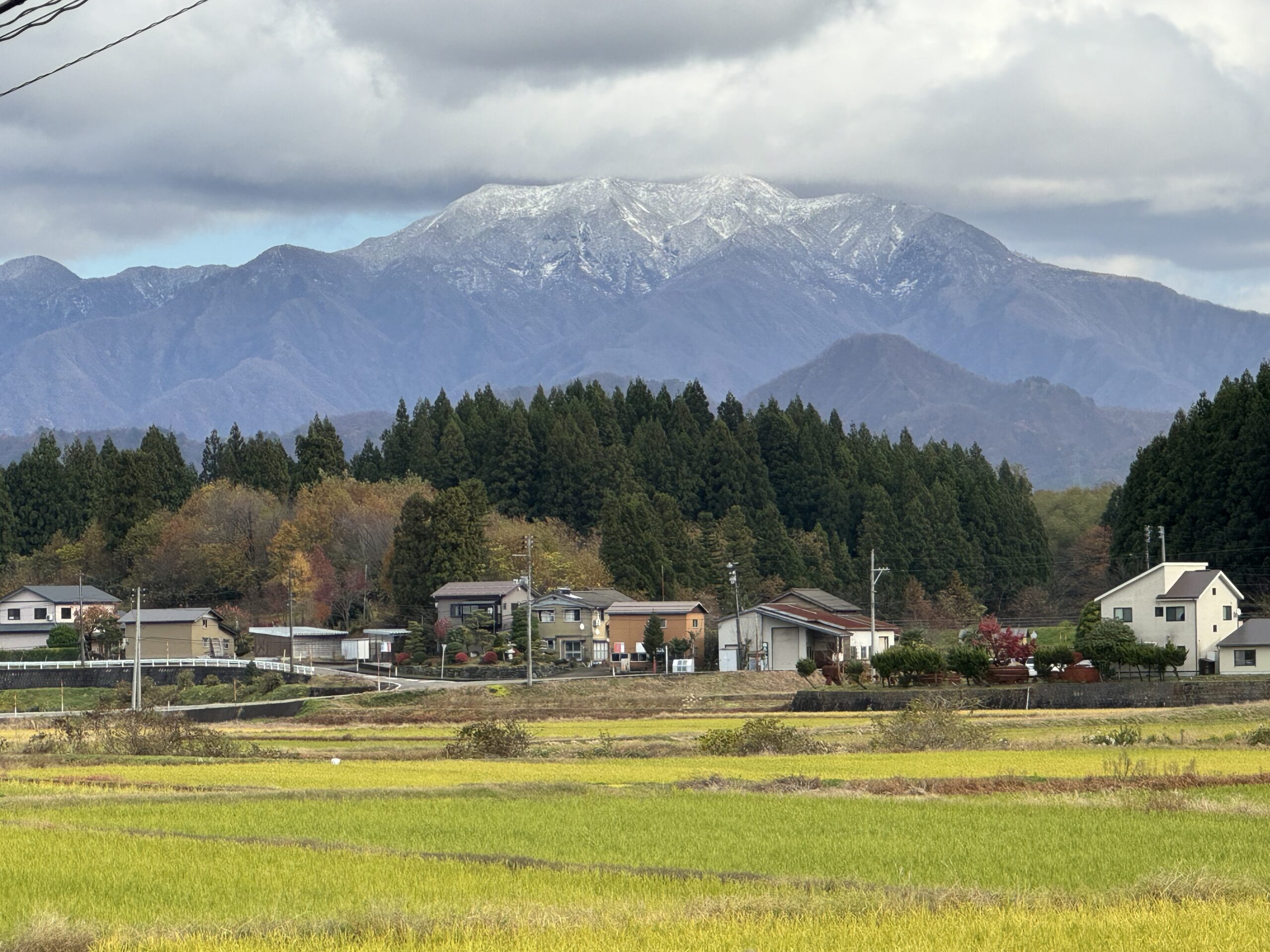
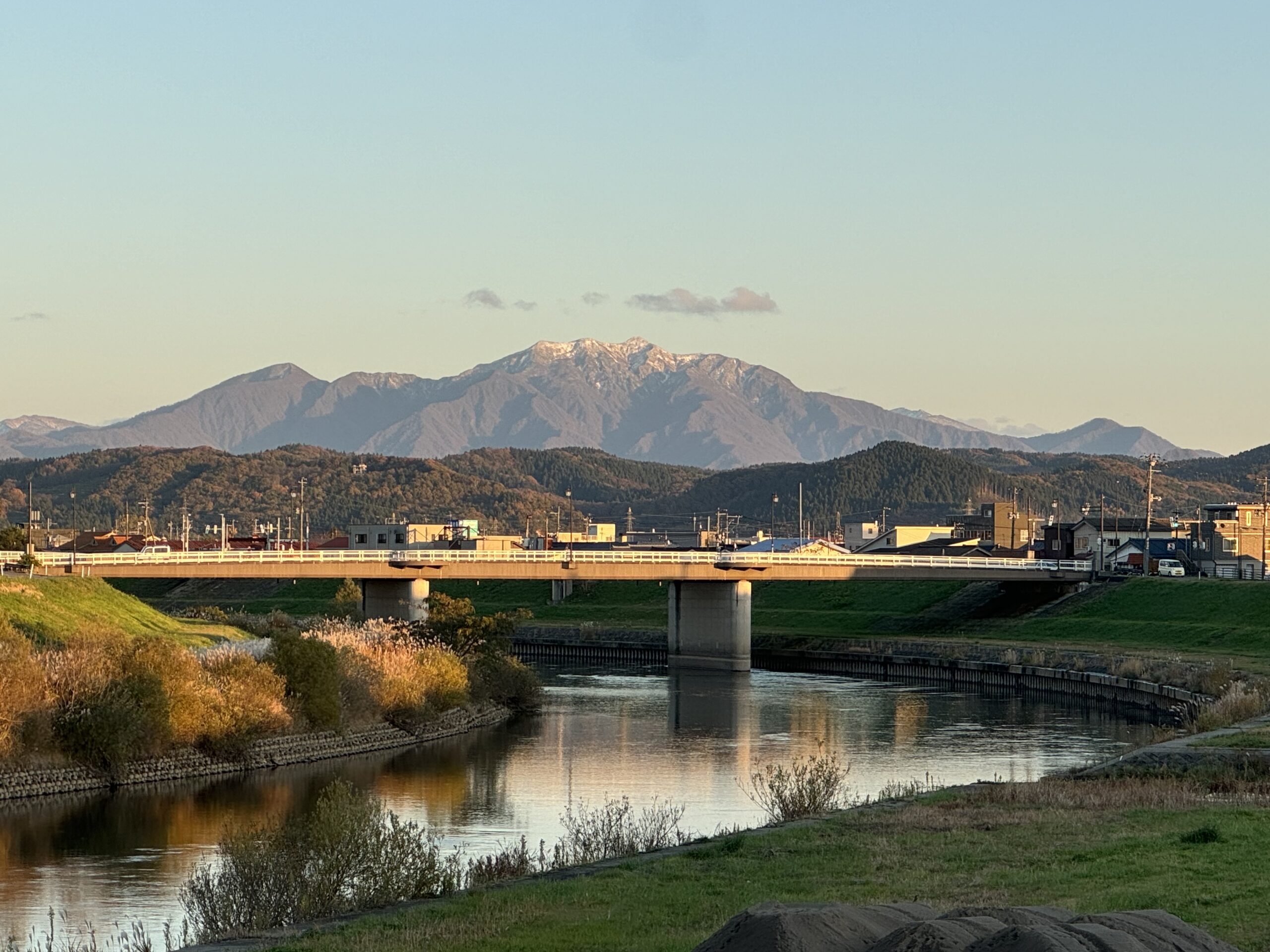
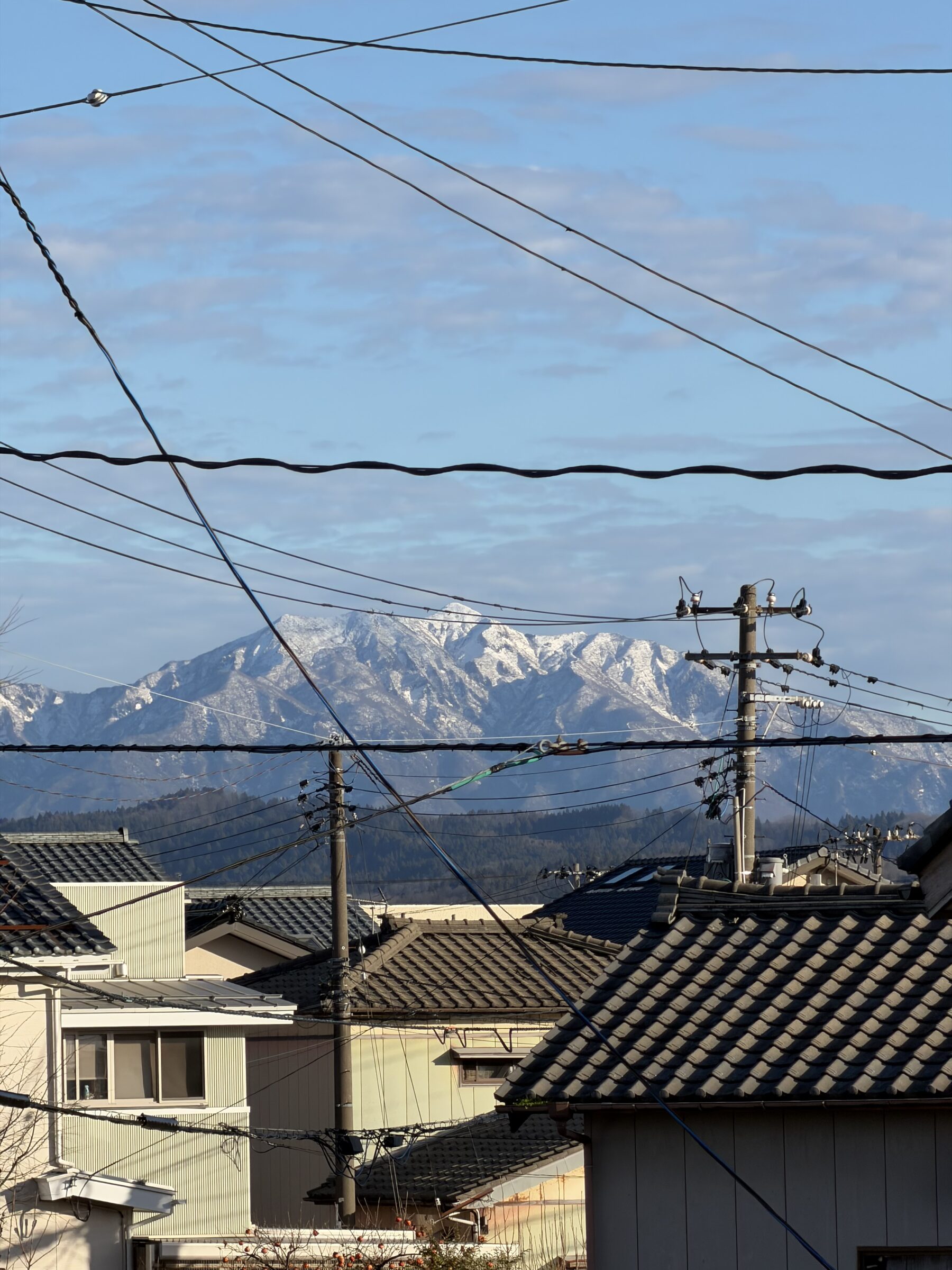
From town, we can see Mt. Awagatake. When snow begins to settle on its summit, locals all sense the same thing.
Winter has finally arrived.
It’s a quiet signal—something everyone understands without needing to say it out loud. I remember my grandfather once telling me, “When heavy snow falls twice on Mt. Awagatake, snow will soon start falling down in the town as well.” In those days, before weather forecasts or smartphones, people read the seasons by watching the mountains. People in the past lived by observing nature and feeling its subtle changes. The color of the sky, the expression of the mountains, the scent carried by the wind— all of these were essential clues for daily life.
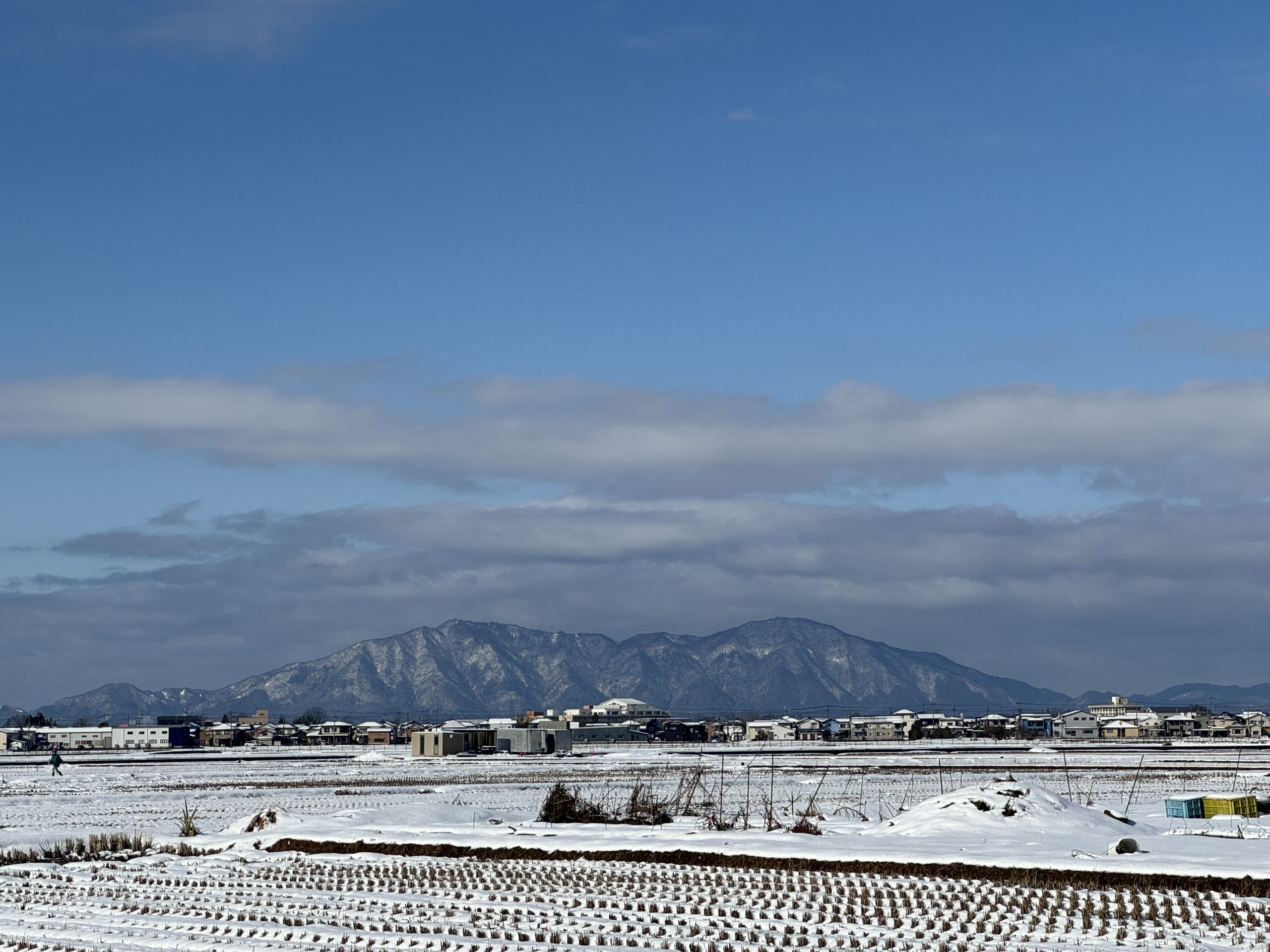
There is another mountain that quietly tells us about the weather. Facing Mt. Awagatake on the sea side stands Mt. Yahiko. When Mt. Yahiko is covered in clouds, rain will fall in town in a few minutes. On the other hand, even if it is raining in town, if Mt. Yahiko is clear, we know the weather will soon improve. The mountain served as a natural weather forecast, gently guiding daily decisions.
My grandfather, who was a farmer, taught me many such forms of wisdom—knowledge gained from living closely with nature. He never made a big deal of it, but those lessons still remain somewhere within my heart.
The beautiful scenery we see every day is not just scenery. It holds the accumulated wisdom, experiences, and time of the people who have lived on this land. Each time I look up at the mountains, I find myself quietly remembering that.