





In this town, there are many small workshops that have quietly supported its industry and culture for generations. They do not have flashy signs, nor are they often introduced in guidebooks. Yet without these modest factories, it would be no exaggeration to say that the town’s industry and culture could never have existed.
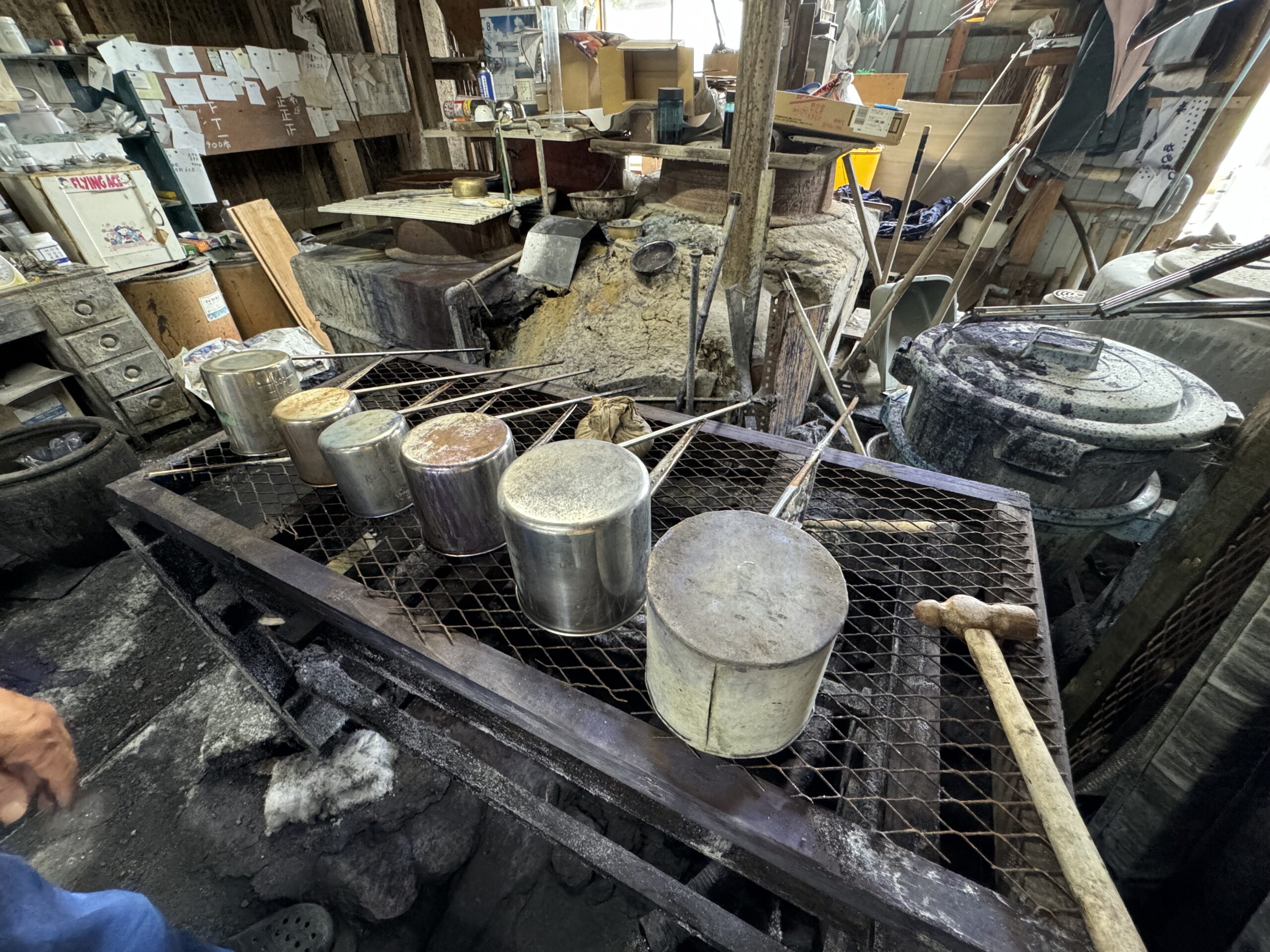
Sanjo was once known as a center for dyed household goods. Traces of that history still remain today in what is now the town’s last remaining dye workshop. As printing technology advanced, demand for traditionally dyed daily goods gradually declined. One by one, workshops closed their doors, until only this single studio was left.
Printing is efficient. It is inexpensive, fast, and well suited for mass production. In modern life, it makes perfect sense. And yet, something feels missing. The perfectly uniform finish lacks the subtle irregularities and the quiet presence that come from work done by hand.
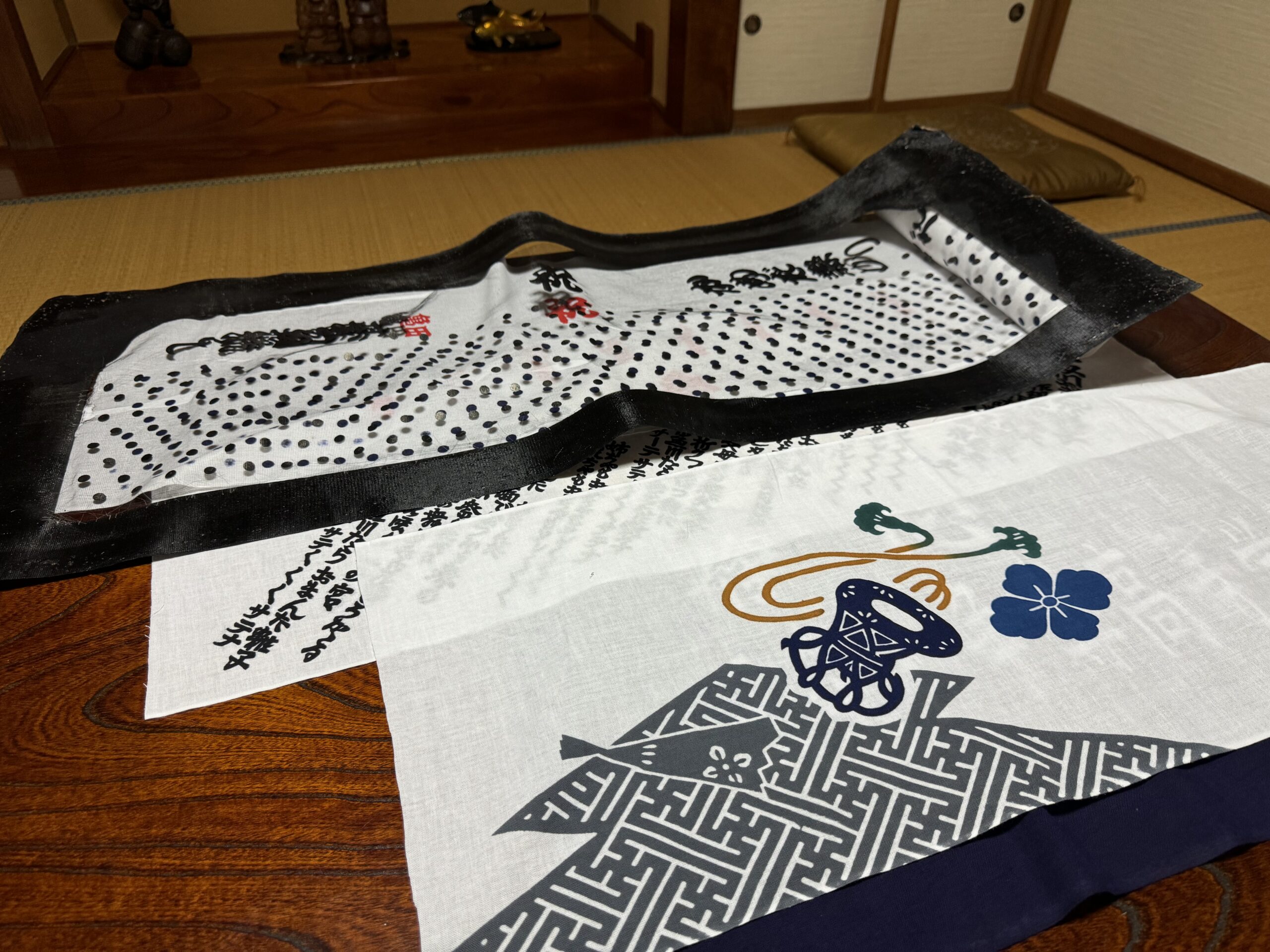
The difference between printing and dyeing is more fundamental than it appears. Printed designs sit only on the surface of the fabric, leaving the back side white. Dyeing, however, allows the color to penetrate deep into the fibers, reaching the reverse side as well. There is no front or back—only fabric fully infused with color. It is the result of time, care, and hands-on work, and it carries a weight that cannot be replicated by machines.
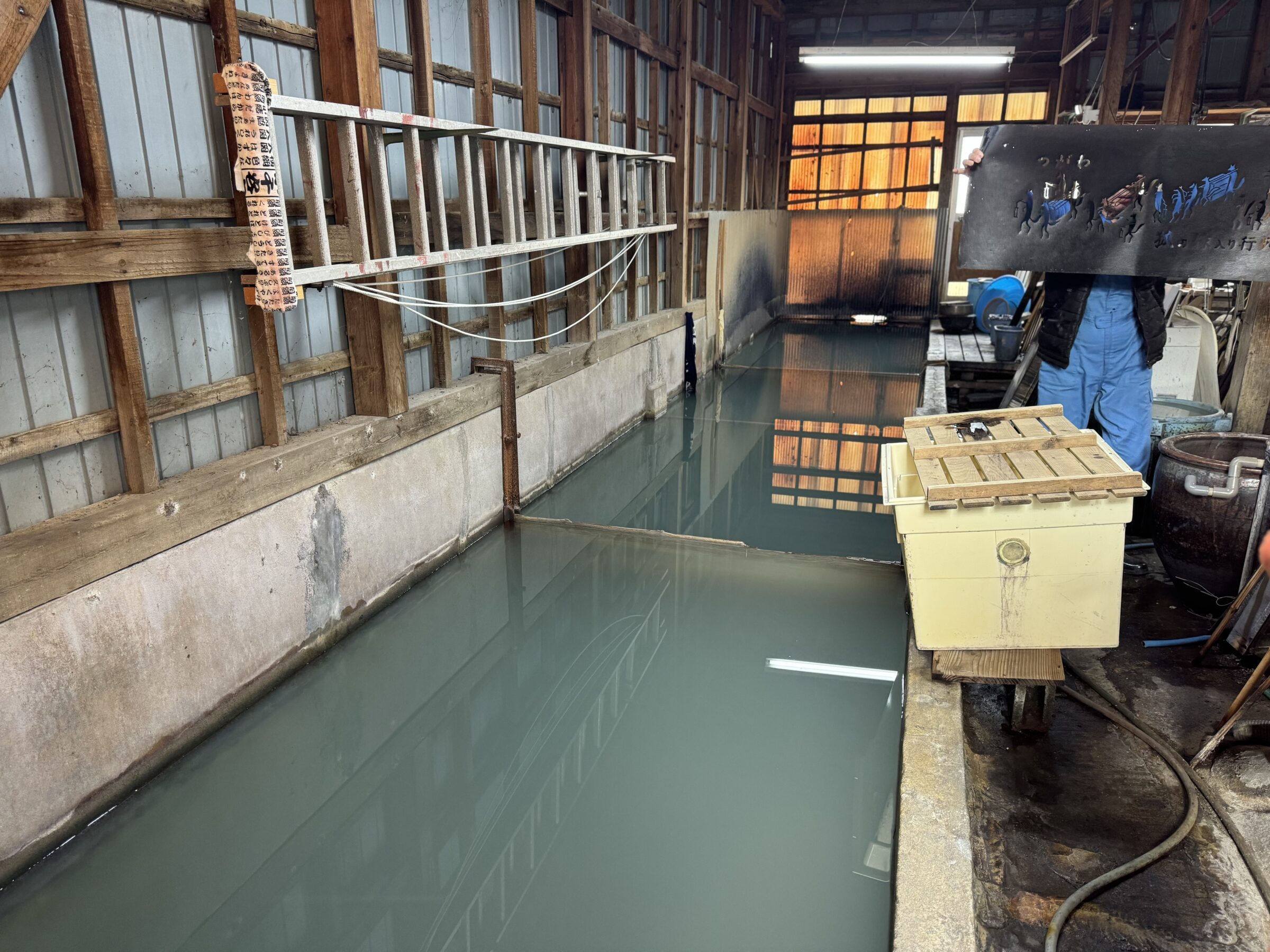
Until a few years ago, this dye workshop produced the tenugui towels used at the town’s summer festival. They seemed to absorb the festival’s energy—the warmth of people, the lingering heat of the evening, and the afterglow of a day filled with movement and sound. But the artisan grew older, and with no successor, it became difficult to continue accepting work. Today, the festival towels are made using printed designs instead.
Every small factory we casually pass by has its own story. Behind each closed shutter lies a history of skills refined over decades, and a life spent working quietly, day after day. Yet many of these stories fade away without ever being told.
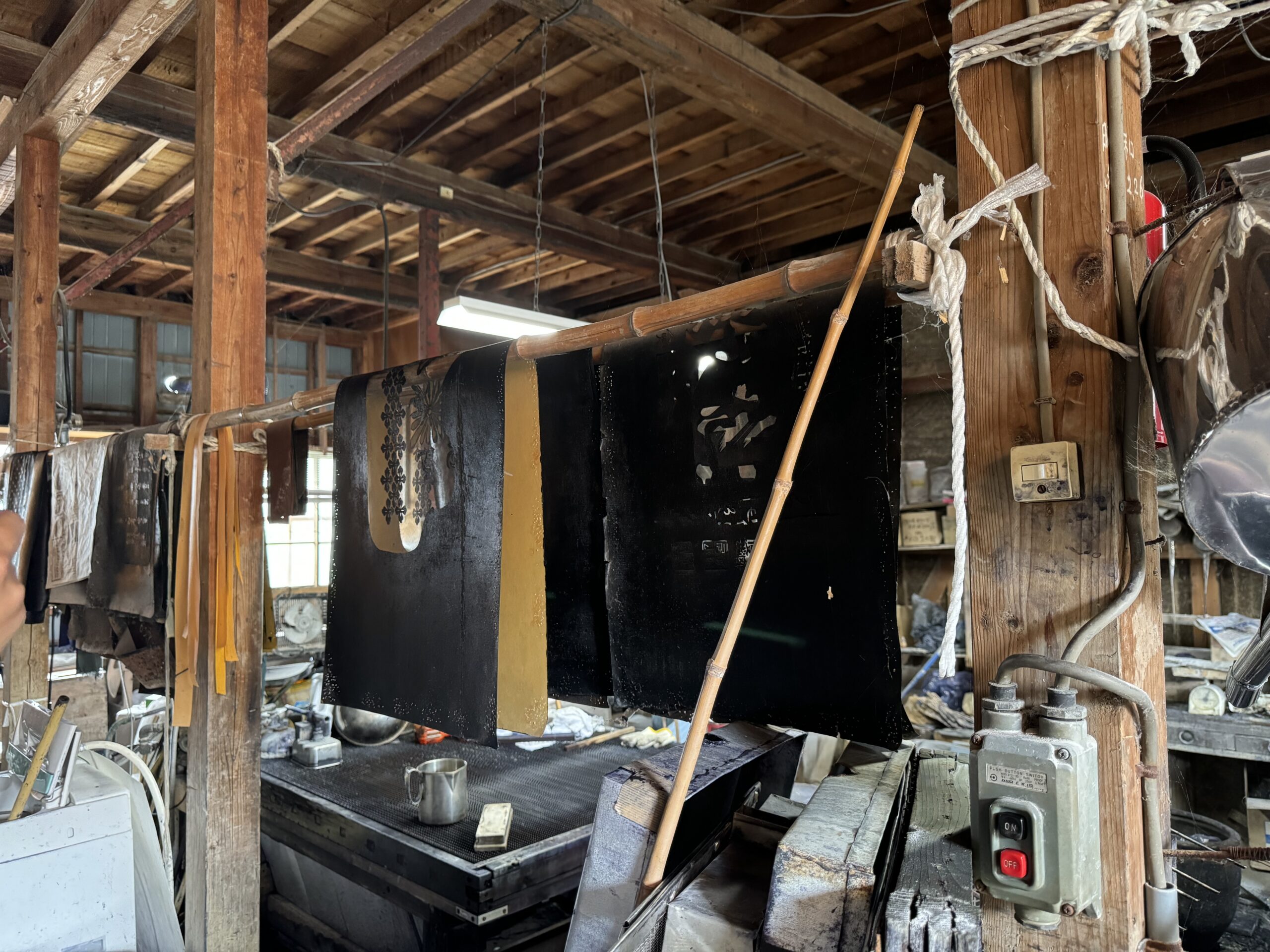
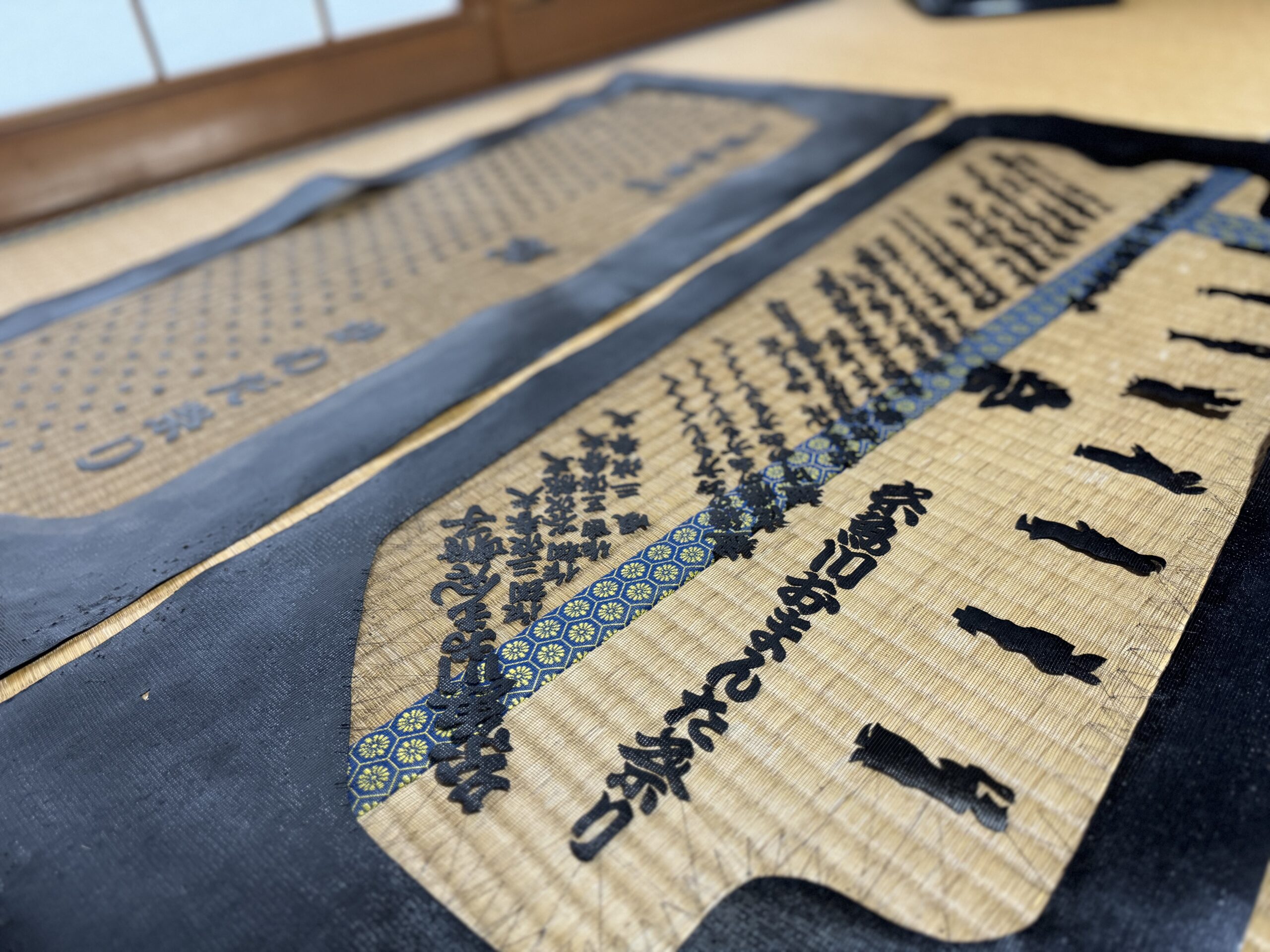
At the Kura Gallery, an exhibition is currently being held featuring the dyed tenugui once produced here, along with the stencil patterns used in the dyeing process. The display reveals more than finished products—it shows the time and thought behind them: designing patterns, carving stencils, and carefully applying dye by hand to each piece of fabric. It is a rare opportunity to glimpse the craftsmanship that once existed beyond the shutter.
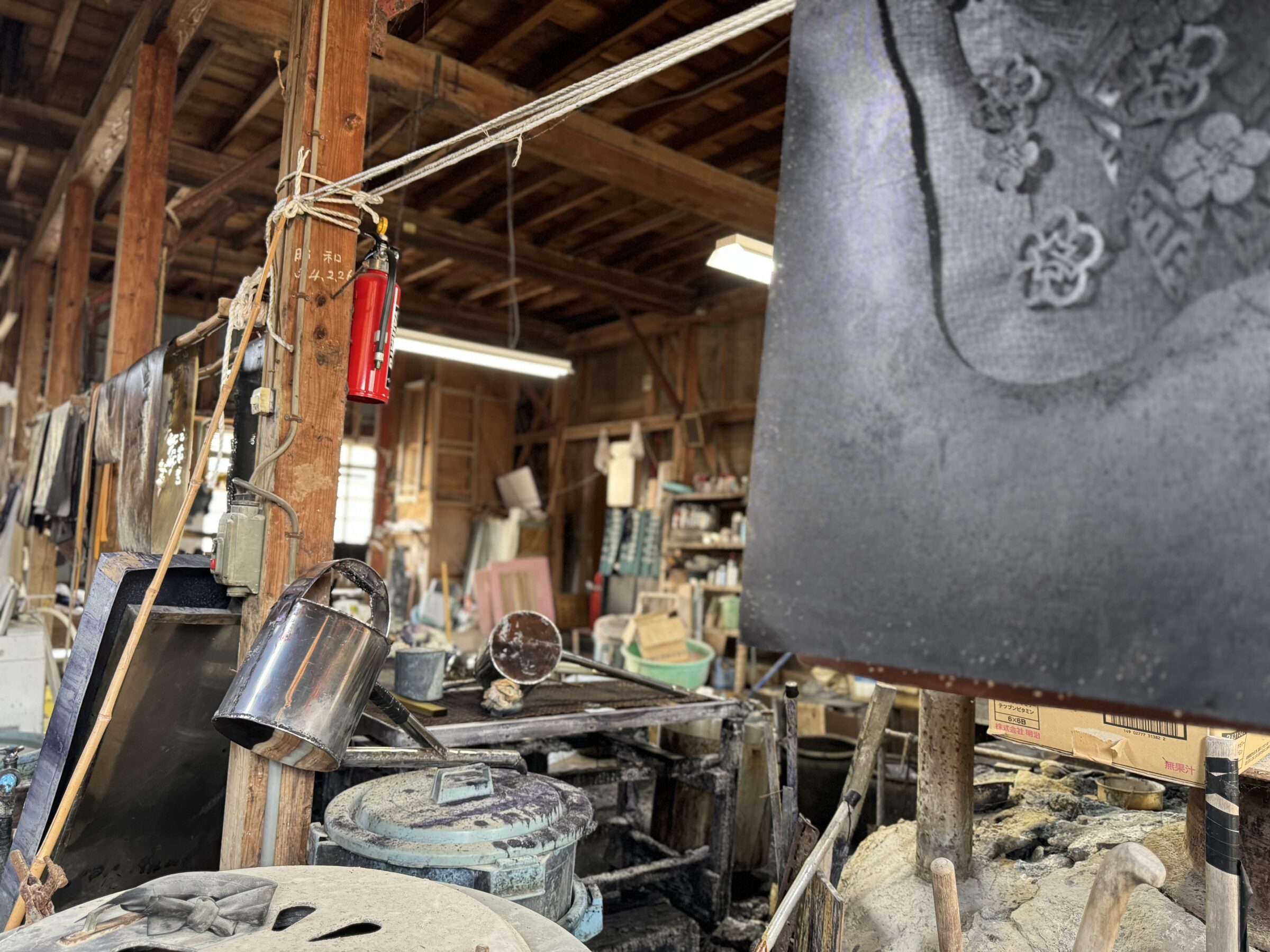
In this town, many workshops disappear without their histories ever being known. That is why, at the very least, their stories deserve to remain. Even if the buildings and techniques are lost, the lives, pride, and dedication of those who worked there should be remembered as part of the town’s history. Behind the roll-up door, there was craftsmanship. And there were lives shaped by it. That truth, at least, should never be forgotten.