





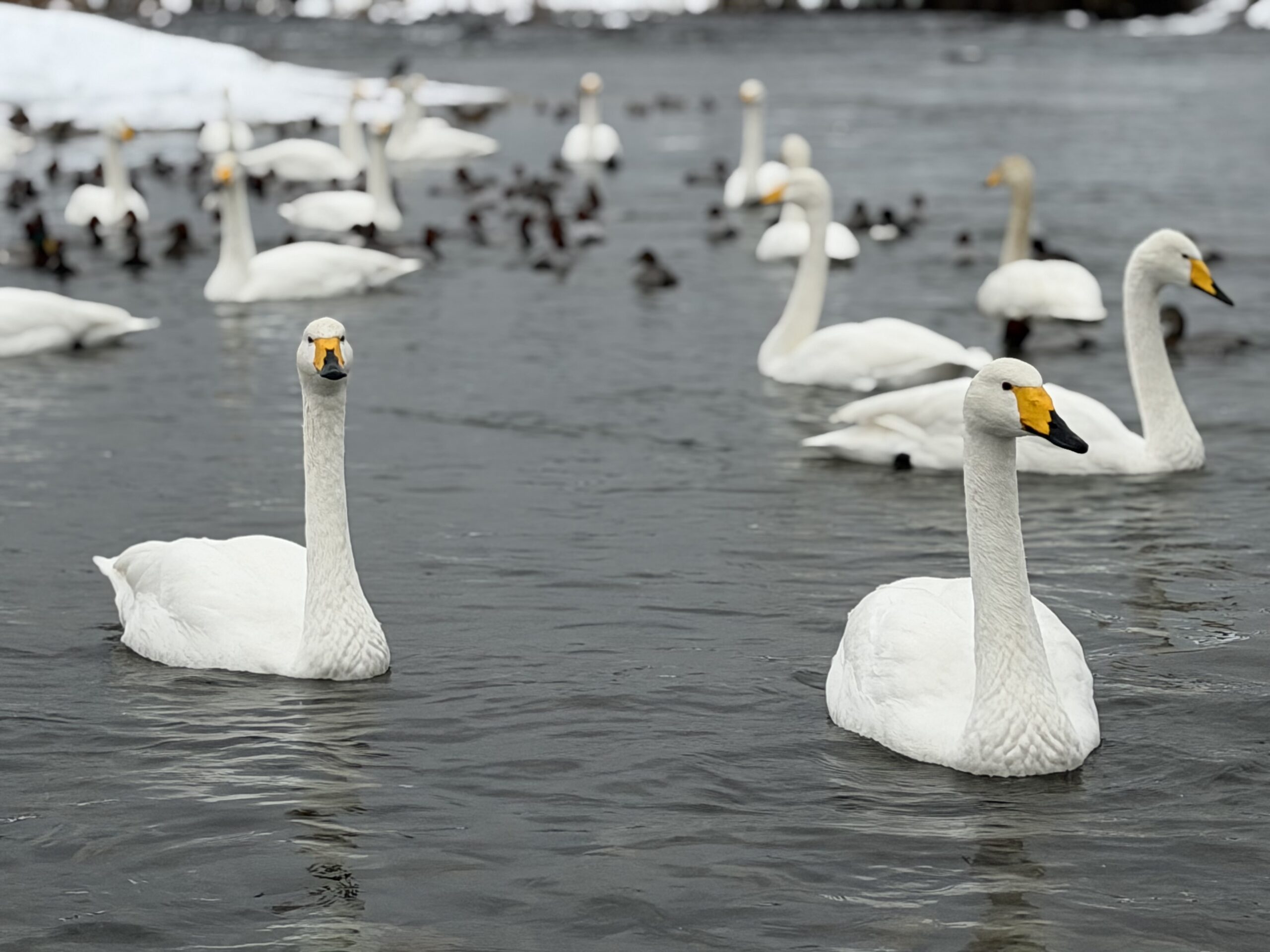
In Sanjo, there is something that signals the changing of the seasons earlier than the calendar ever does. Every year, in the latter half of October, it arrives from faraway Russia—the swans. When you look up at the sky in the early morning or at dusk, you can hear their high- pitched calls as flocks of swans fly overhead in perfect formation. The moment locals notice them, they all think the same thing, almost instinctively:
“Winter is coming, at last.”
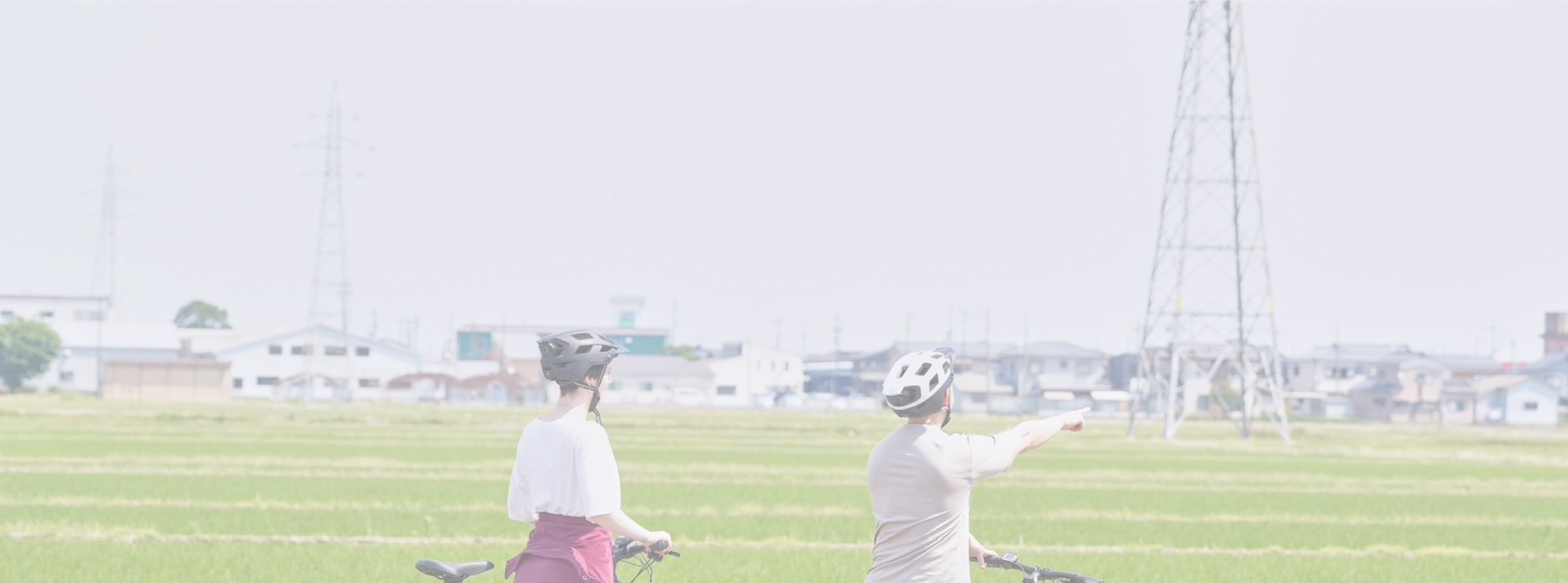
The swans settle not only on rivers and lakes, but also in the rice fields spread out around the industrial zones. Watching them forage in the harvested paddies has become part of everyday life in this town. The contrast between the seemingly inorganic industrial landscape and the pastoral scenery where swans rest side by side may be one of the things that makes Sanjo uniquely Sanjo.
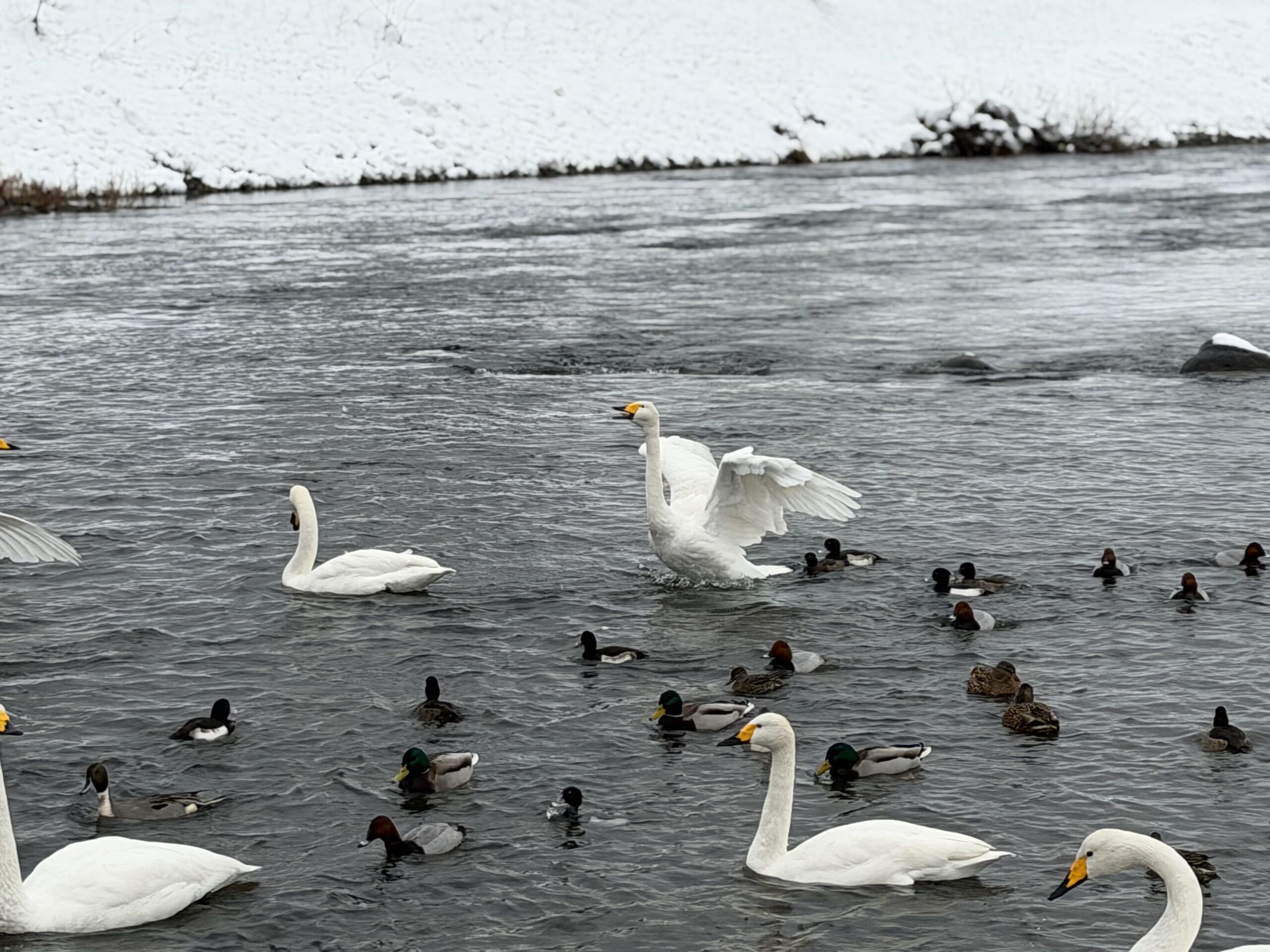
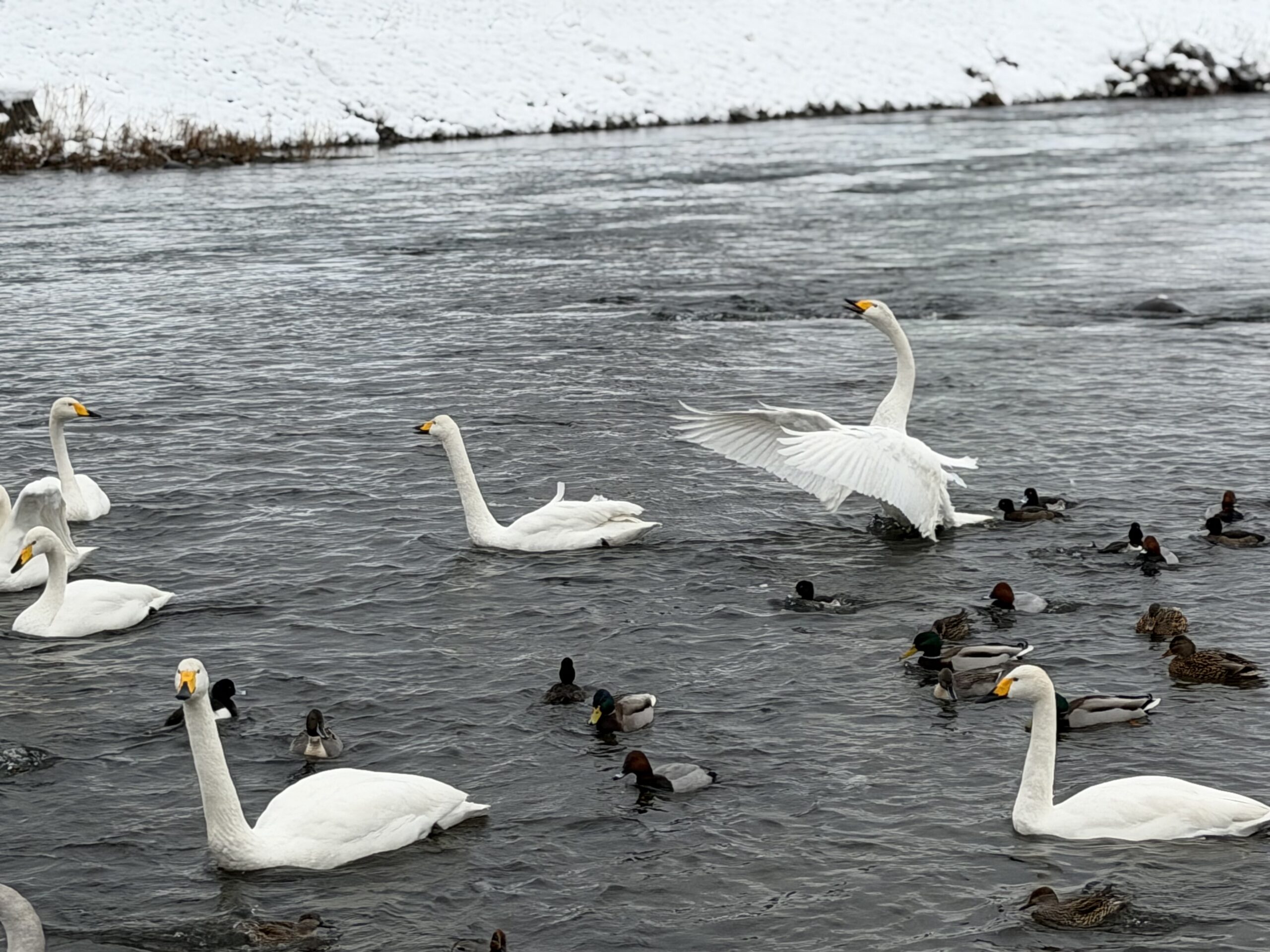
When the swans arrive, people’s lives quietly begin to shift as well. Preparing snow wires, snow enclosure for trees, changing wardrobe. Without anyone telling them to, people begin getting ready for the long, harsh winter ahead. The swans are like a signal that marks the turning of the season. Looking up at the sky, dozens of swans fly in orderly lines. Their dignified presence conveys the quiet greatness of nature in a way that words can hardly capture. No matter how many times you see them, they never become ordinary.
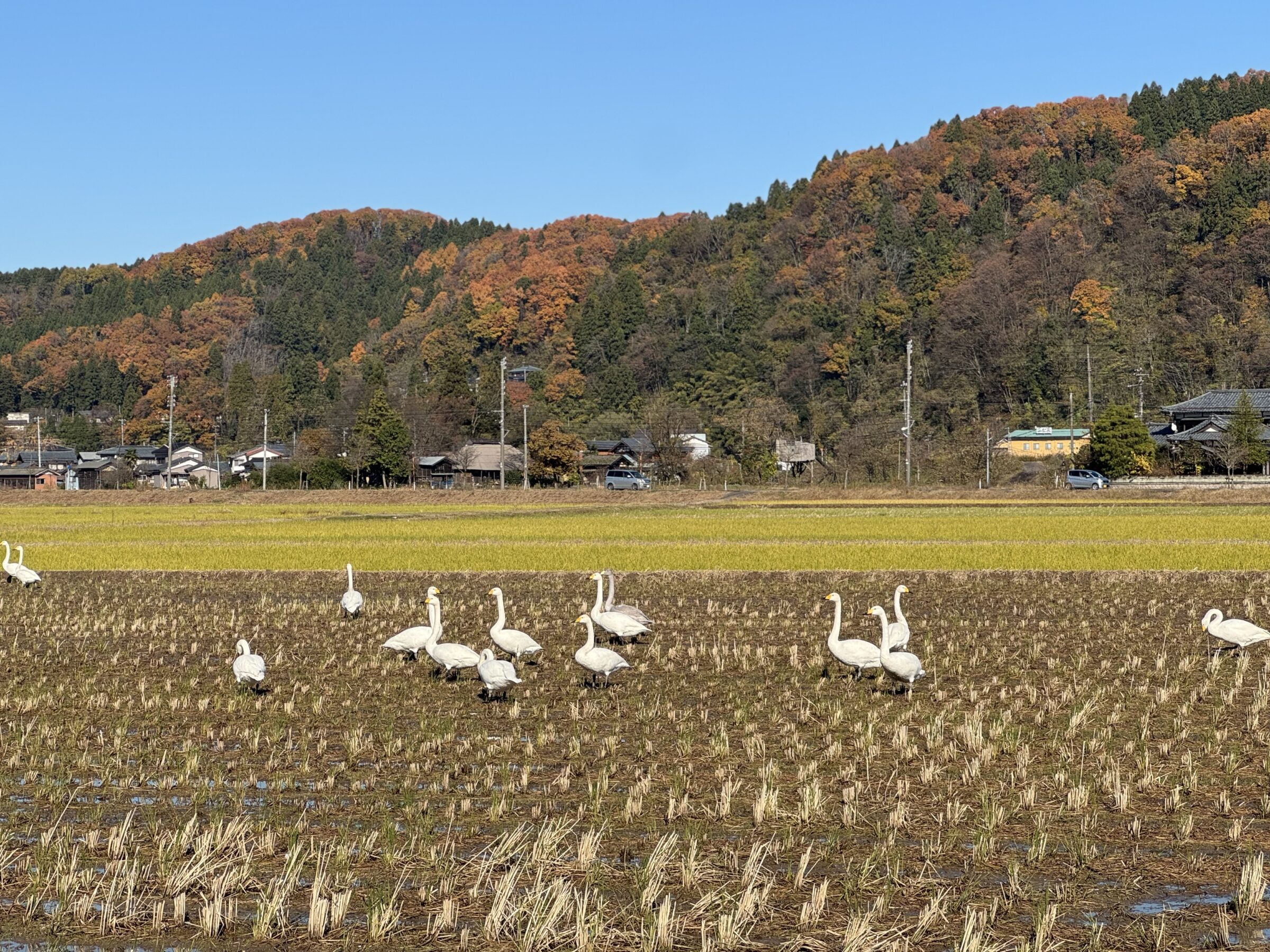
At the same time, swans are a source of comfort for many people. On weekends, locals gather at a riverside area known as Hakuchō no Sato—“The Swans’ Village”—to feed them. Children and elderly alike keep a gentle distance, spending quiet moments in the presence of the birds. There is no tourist-like bustle here, only the calm, unassuming scenery unique to this town.
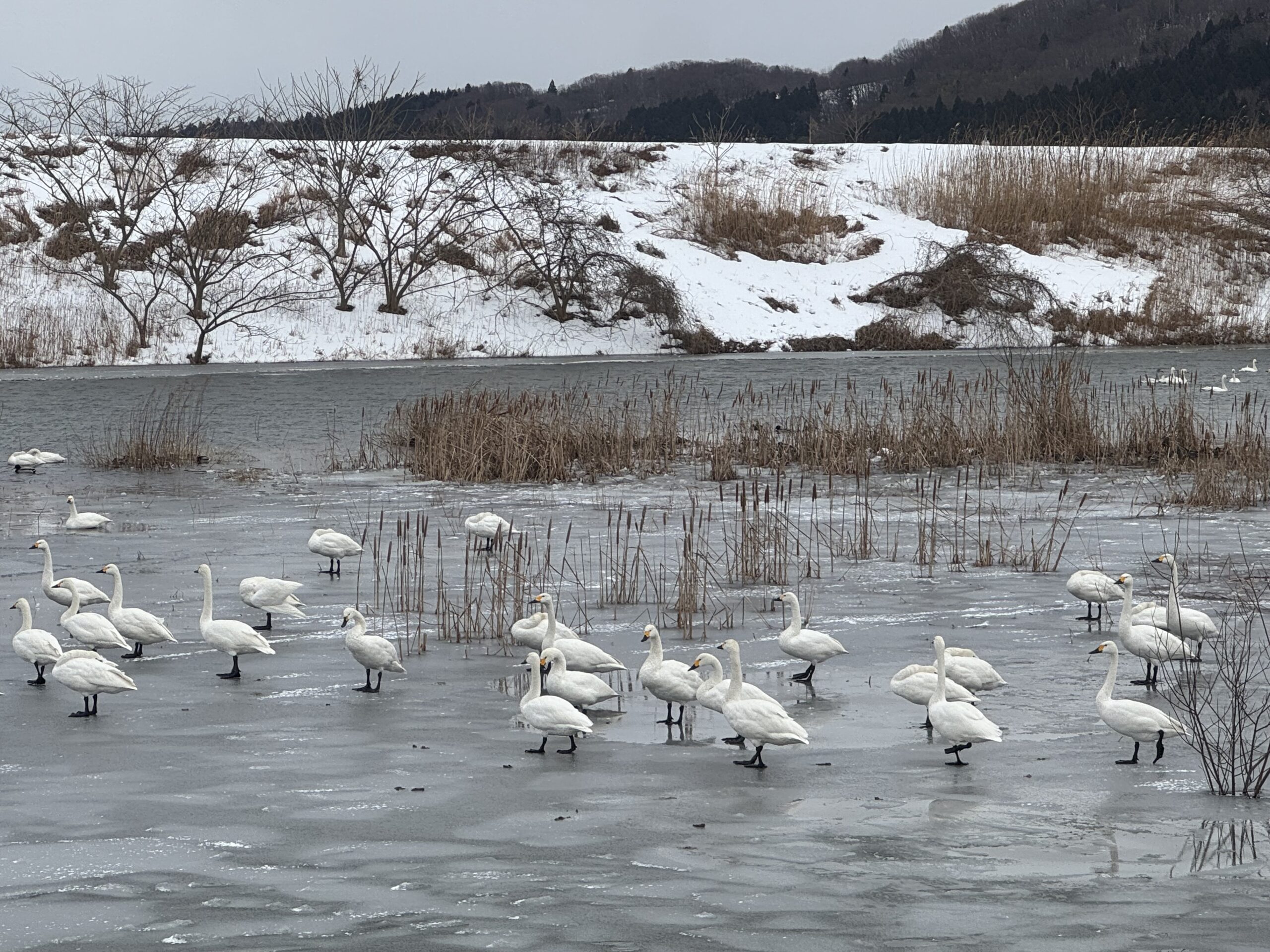
Last spring, among those swans was one that had been injured and was unable to return north to Russia. The local community watched over it with concern, occasionally feeding it and helping it endure the intense summer heat. Then this season, when the flocks returned once again, that swan was able to rejoin them safely. Many people must have felt a quiet sense of relief upon seeing it. The swans are not just migratory birds. They are deeply woven into the lives and hearts of the people in this town.
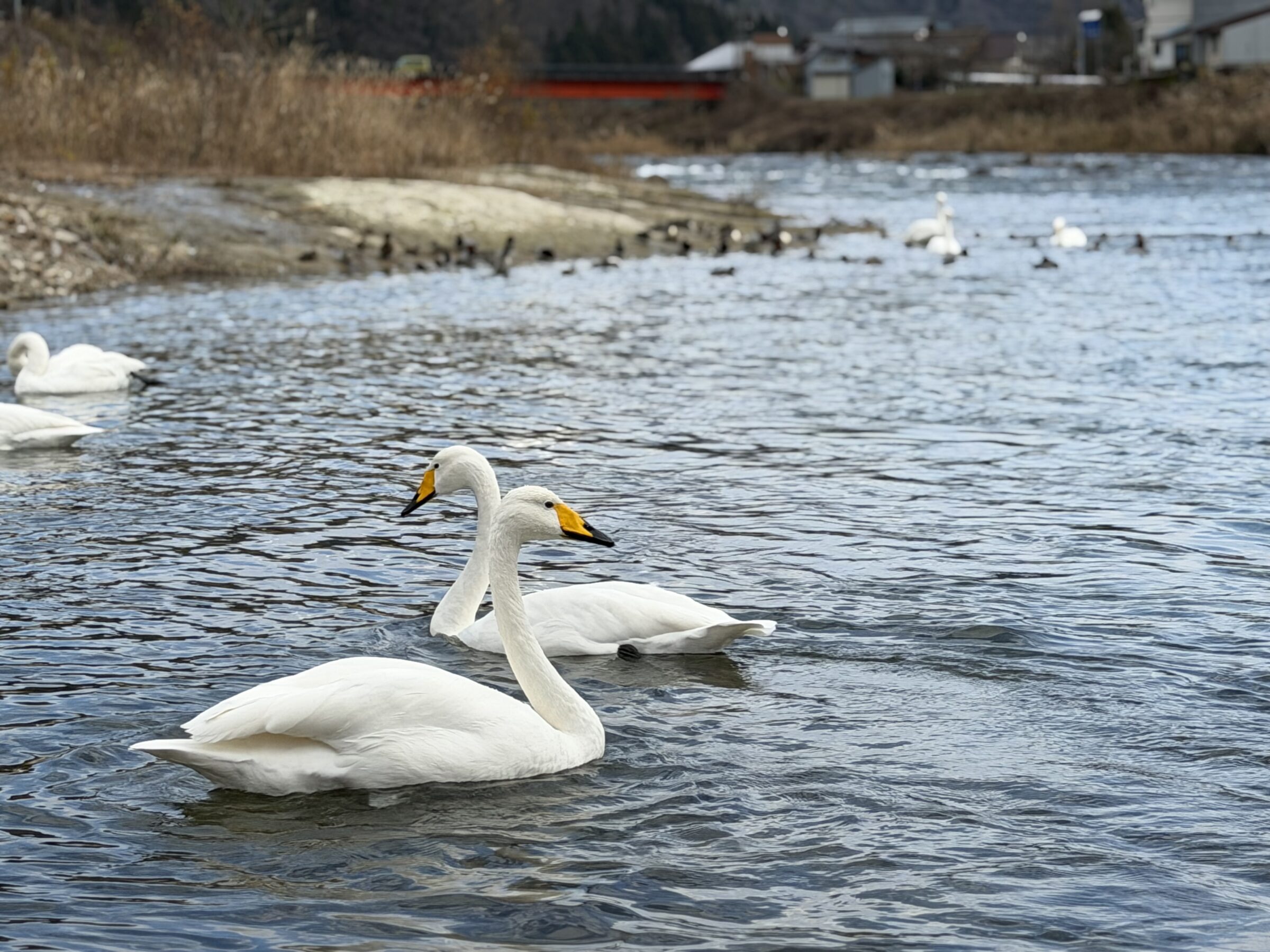
These subtle changes of the seasons rarely appear in tourist guides. Yet they are precious scenes that locals feel every year and quietly pass on. Each time the swans arrive, winter begins—softly and surely—in Sanjo.