






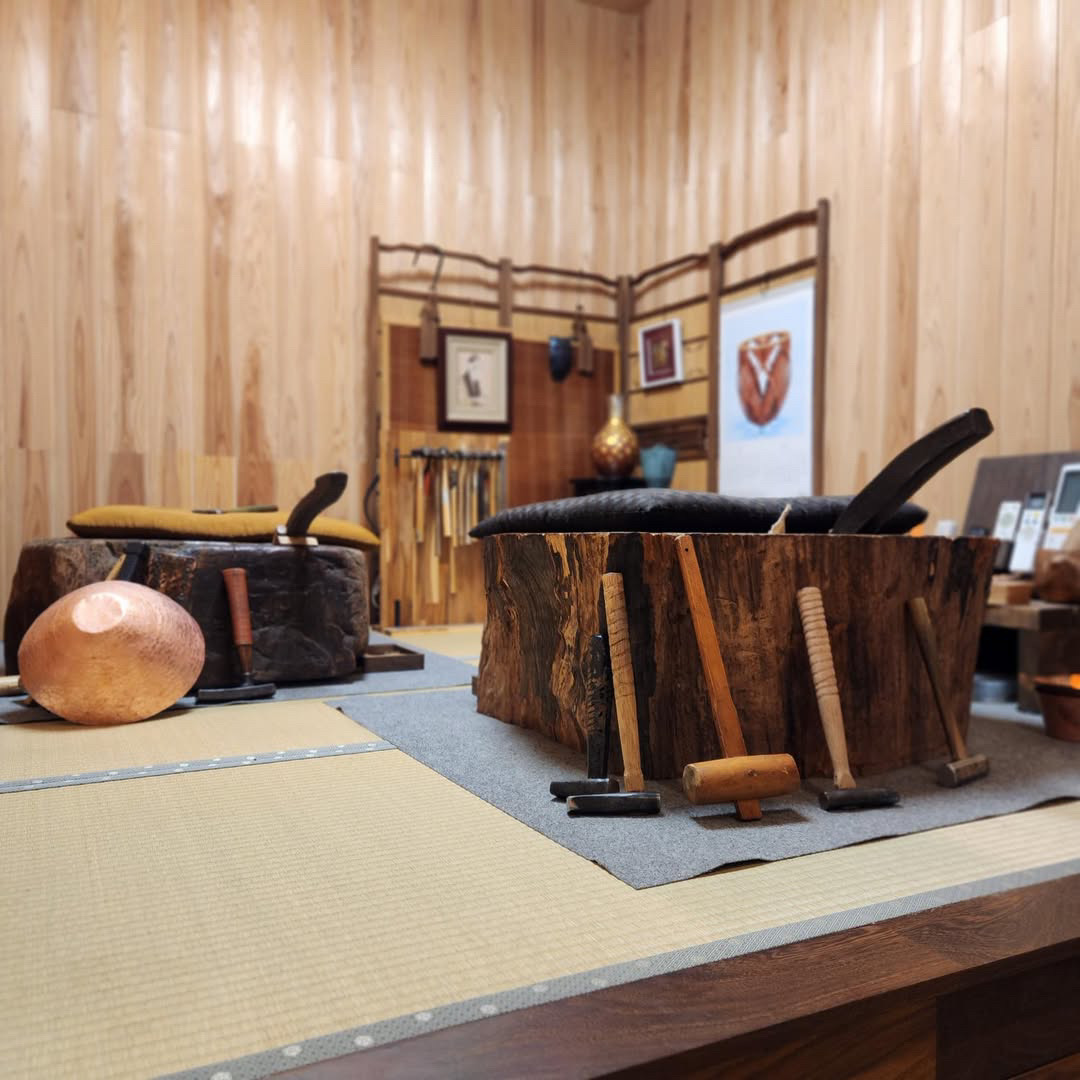
The Tsubame-Sanjo region of Niigata Prefecture has long been known as a town of metalworking. From kitchen knives to tools, this area produces world-class craftsmanship, and even today, many skilled artisans continue to work here. Among these traditions, tsuiki-doki (hammered copperware) is a craft originally rooted in the city of Tsubame. This technique involves hammering a single sheet of copper thousands of times, gradually shaping it into a three-dimensional form. It is a skill that has been passed down through generations over a long history.While this tradition belongs to Tsubame, there is in fact an artisan carrying it forward in nearby Sanjo City. One such craftsman is Makoto Susa.
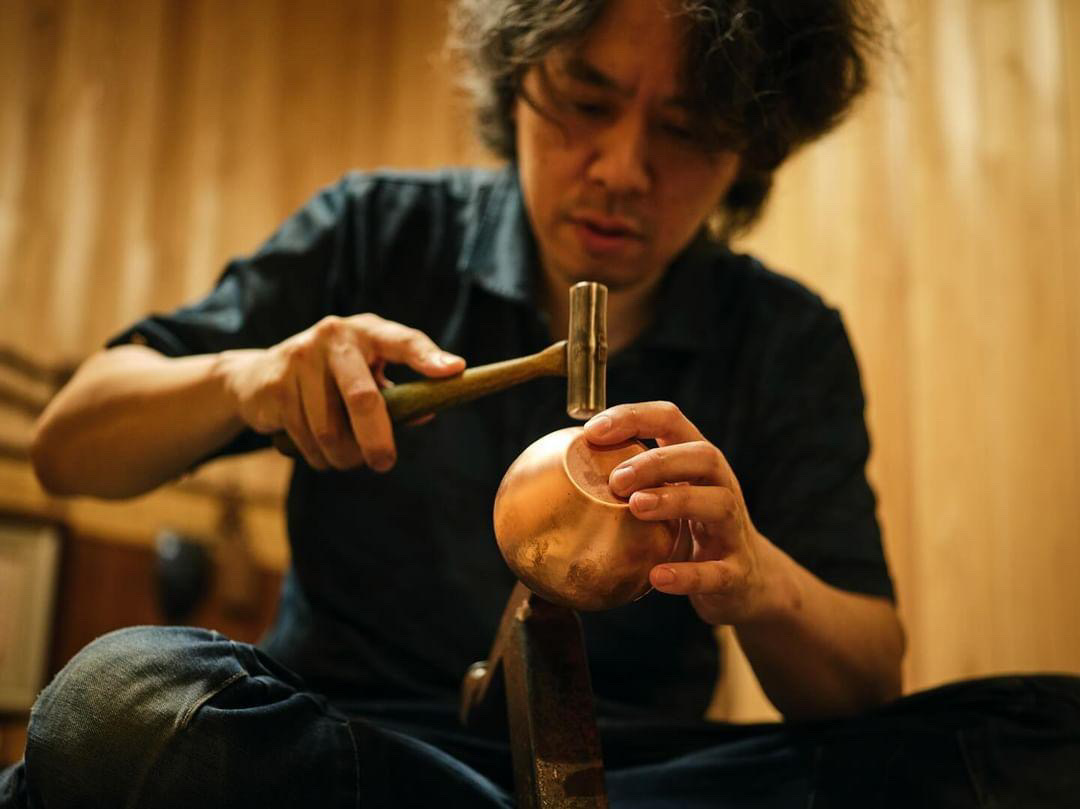
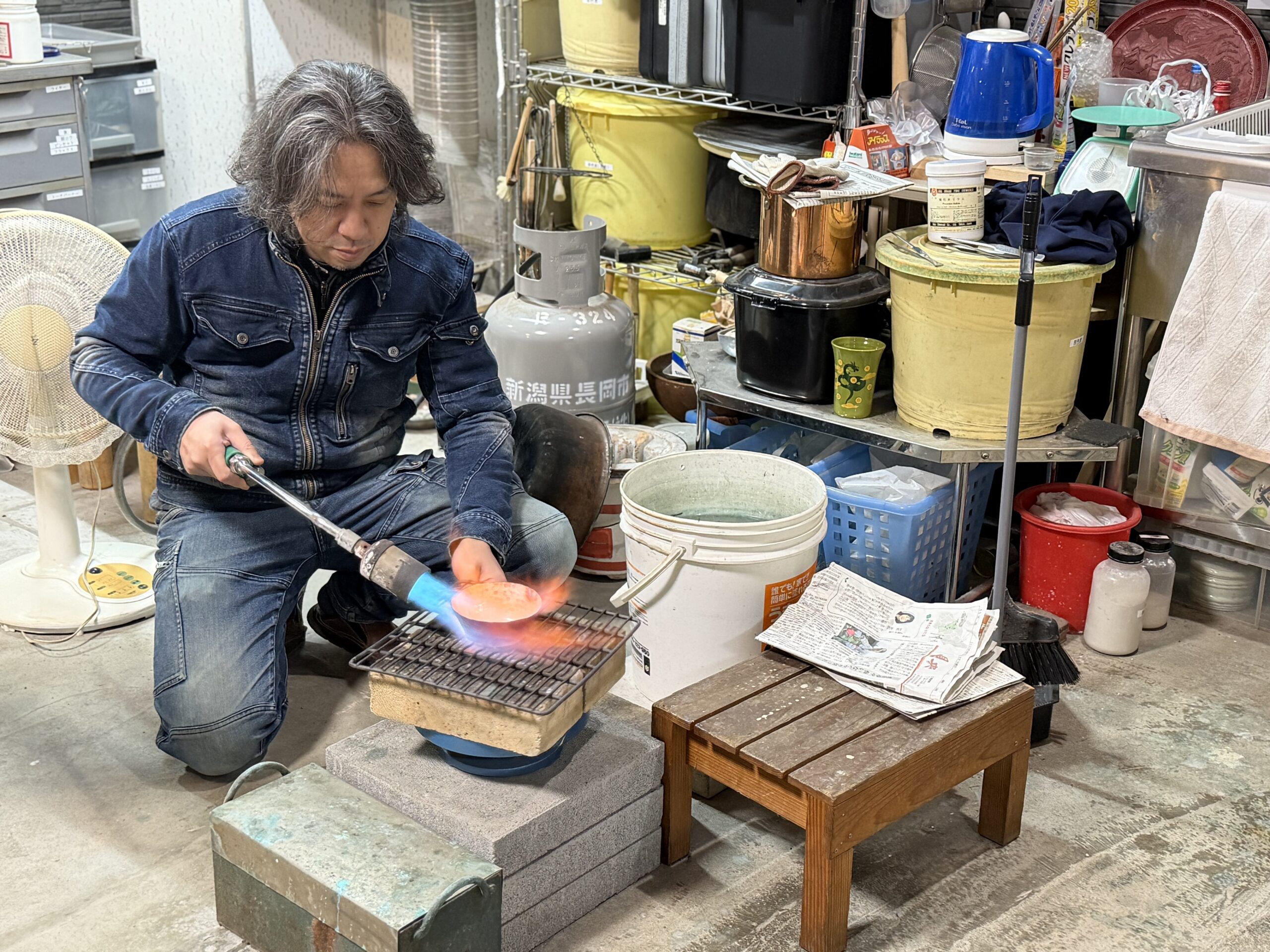
Mr. Susa trained at a long-established tsuiki-doki workshop in Tsubame before becoming independent. Today, he runs his own studio in Sanjo City, where he continues to create his work. While inheriting the traditional techniques rooted in Tsubame, Susa has developed his own artistic sensibility, pursuing a unique form of expression. His work has been highly acclaimed, and he even demonstrated tsuiki-doki at the Osaka Expo. Watching a flat sheet of copper gradually transform under the rhythm of the hammer is a captivating experience. The surface of tsuiki-doki features a distinctive pattern known as tsuchime (hammer marks). These are not decorative additions, but the actual traces of the artisan’s work—each piece bearing a one-of-a-kind expression.
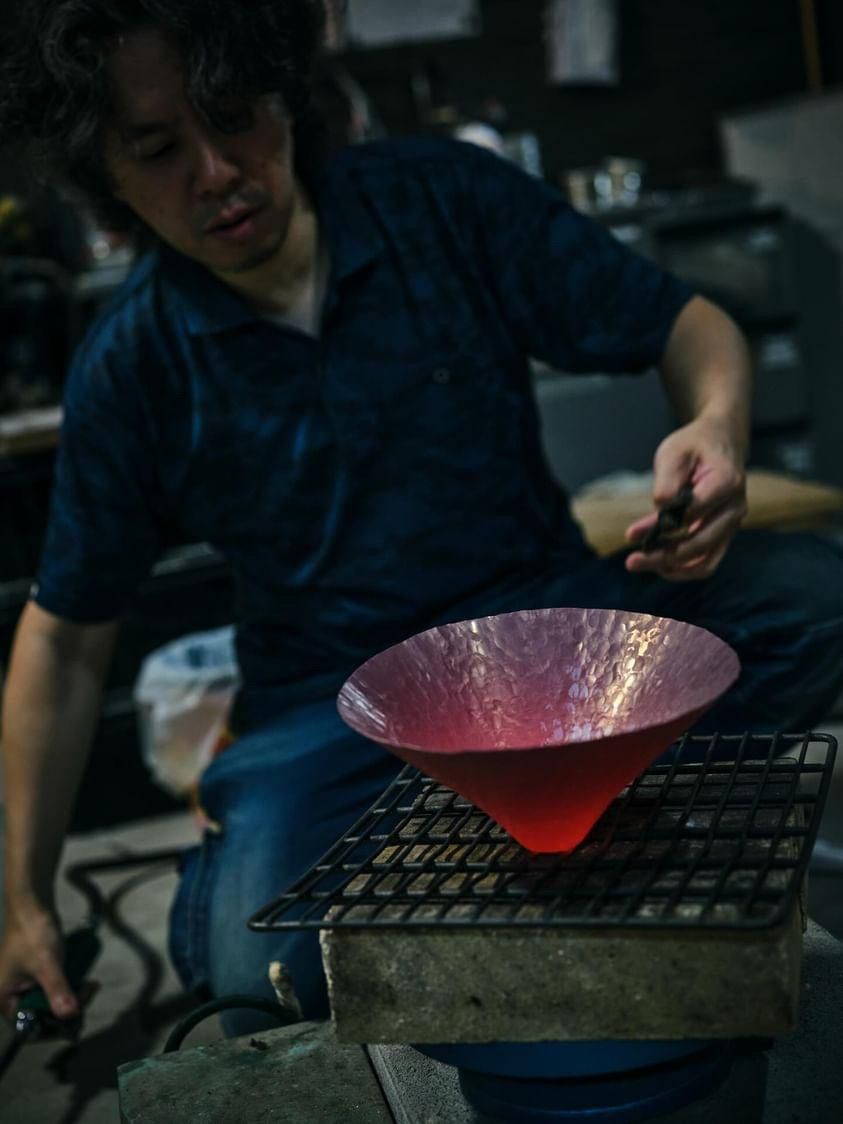
Beyond preserving tradition, Susa has also developed his own techniques and methods of metalworking. His creations, which make full use of the light and texture of metal, carry a sculptural presence while still functioning as everyday vessels. Smooth curves, the soft glow of copper, and the rhythm carved by the hammer—Makoto Susa’s works are both practical tools and art born from metal.
At KRaft, we also offer tsuiki-doki workshops led by Makoto Susa. The experience of hammering copper and shaping your own piece allows you to feel the depth of craftsmanship in a way that photos or videos simply cannot convey. At first, it may feel difficult to shape the material as you imagine, but when you complete your piece, you are left with something truly one-of-a-kind. It is a rare opportunity to experience a traditional craft rooted in Tsubame here in Sanjo. We warmly invite you to join a KRaft tour and take part in Makoto Susa’s tsuiki-doki workshop. Through this experience, you will surely gain a deeper appreciation of the craftsmanship of Sanjo.